Tlingit in Kake
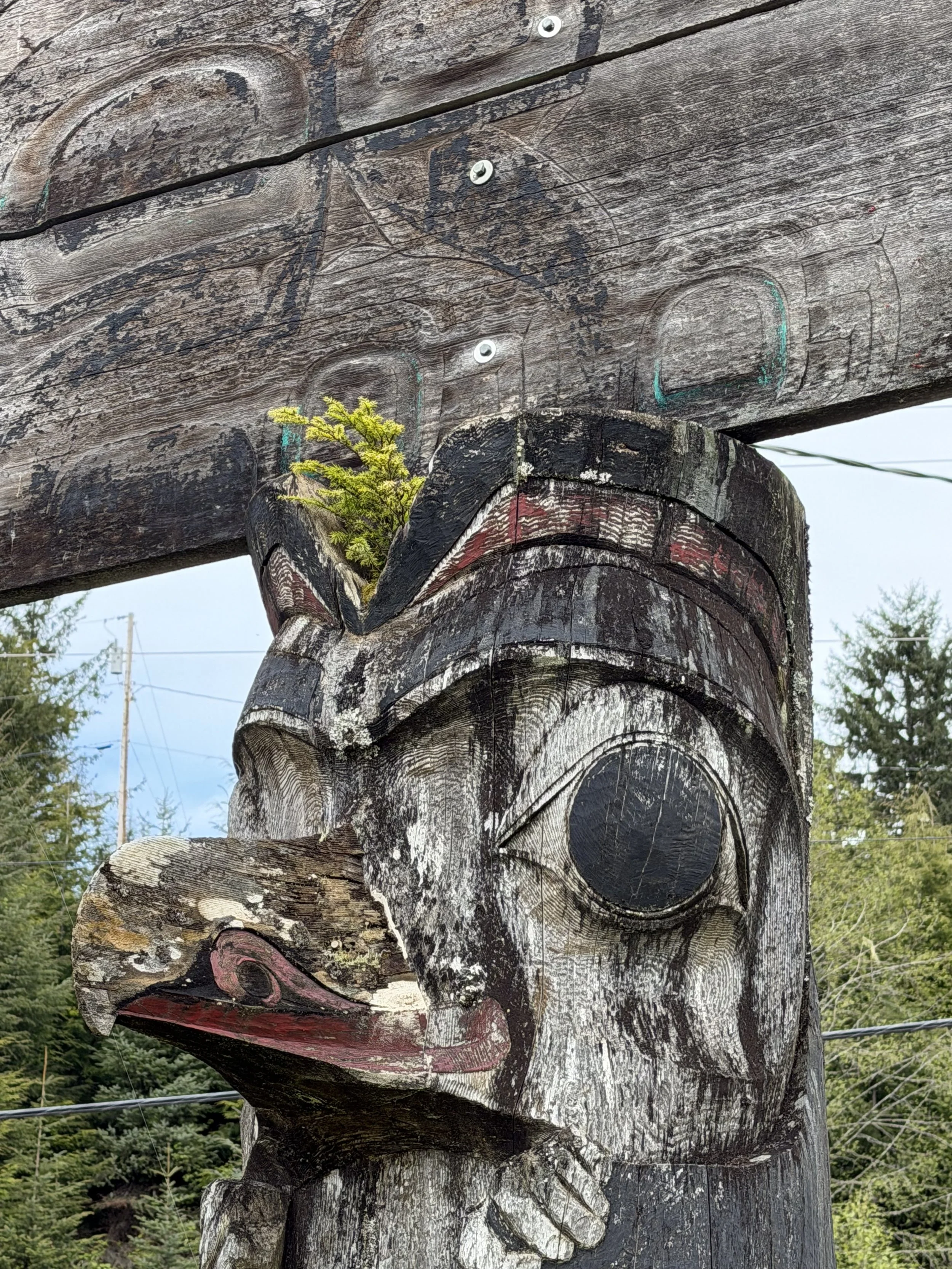
Despite its rich tribal Native Alaskan cultural history, cheerful daffodils, tulips, and dandelions blossoming, the small town of Kake had a forgotten air about it. The salmon have not yet arrived and the trucks still crunch on their winter tires. It is only mid-May with recent rain clinging to the weathered facades of homes that seem too fragile for this harsh climate. There is a lot of debris everywhere, on front porches, in side yards, and it occurred to me that there is just no place to get rid of stuff. The closest city is Juneau, an eight hour ferry ride away.
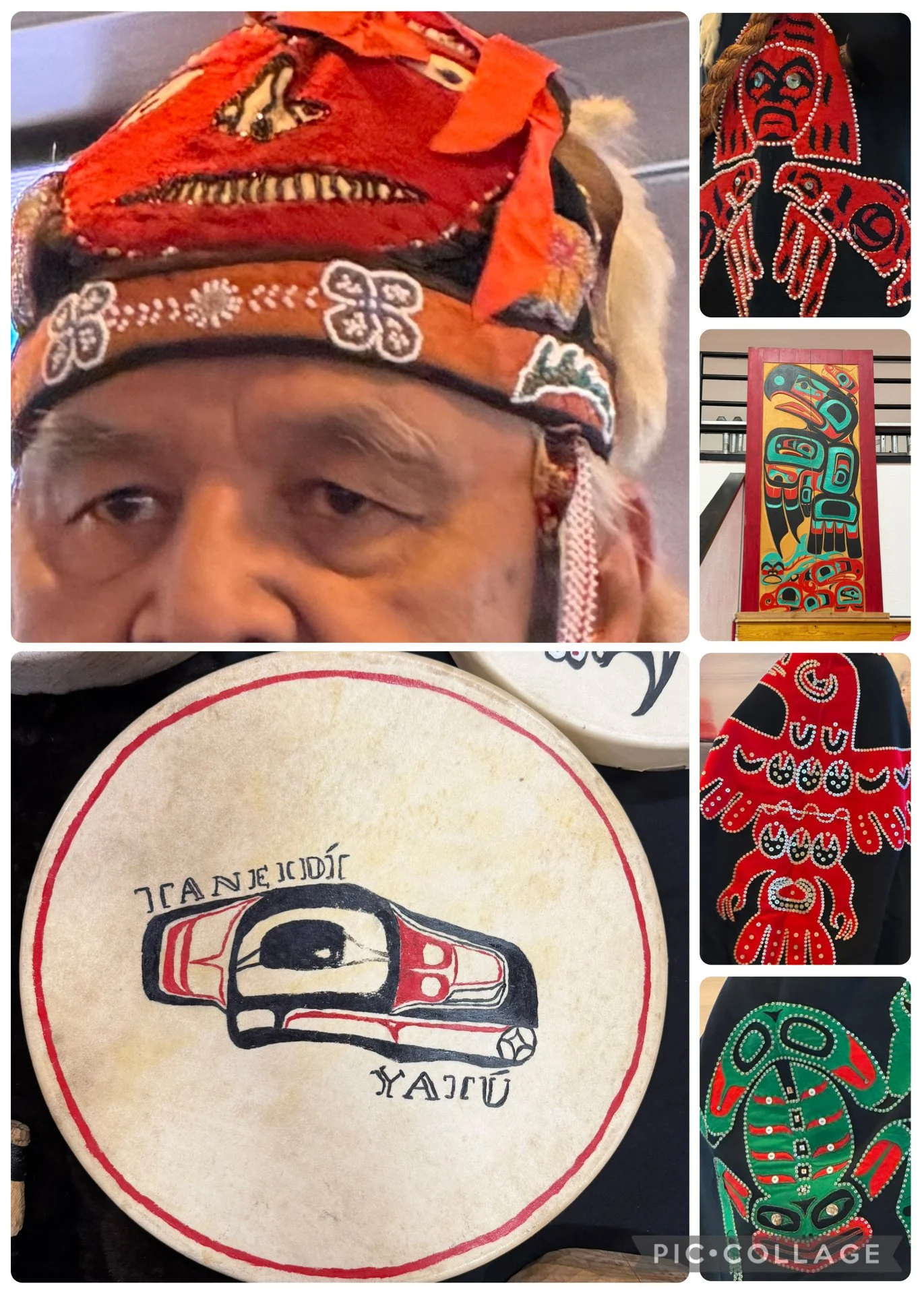
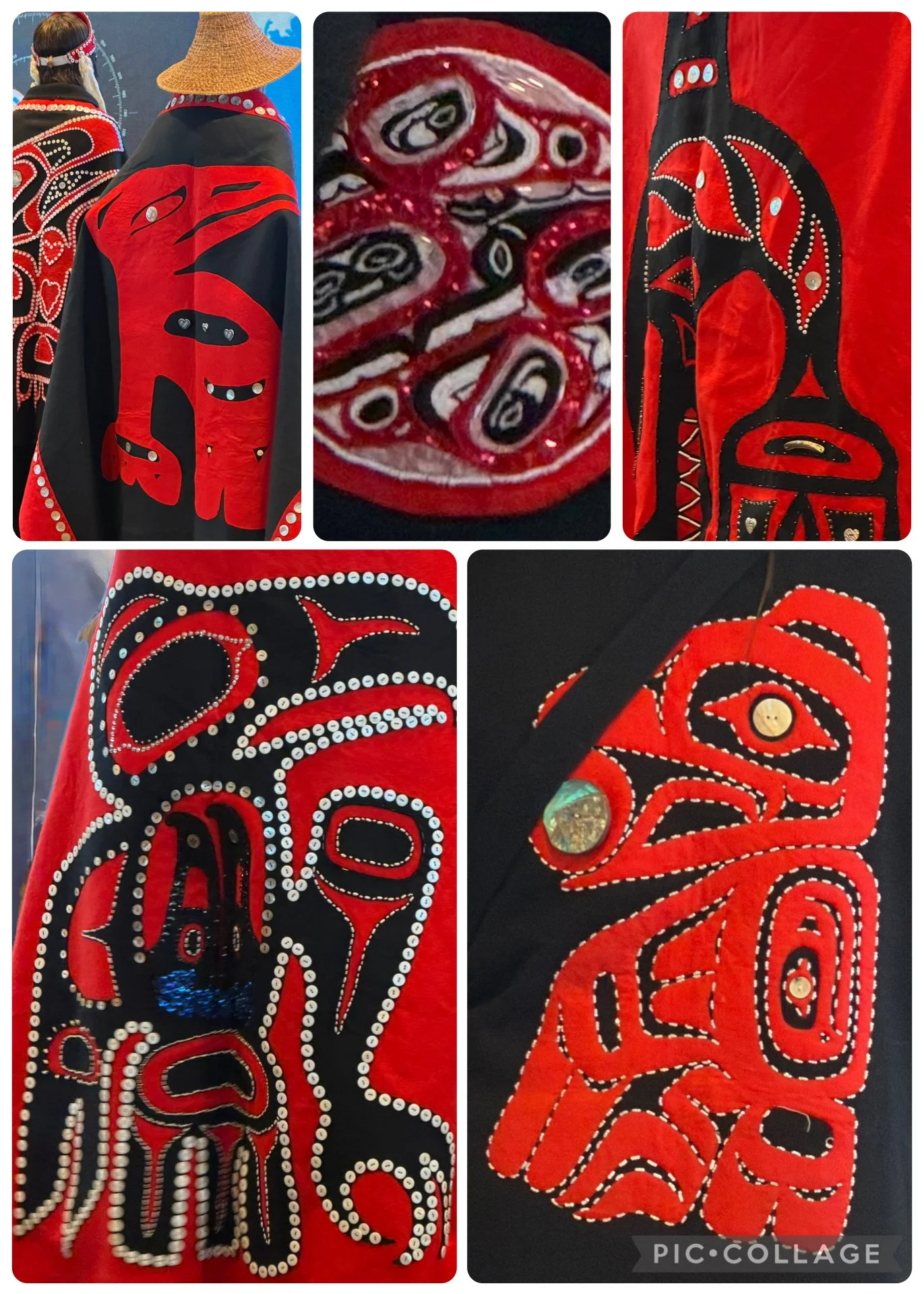
The last census showed 543 inhabitants of which three quarters are Native American/Native Alaskan. Efforts are being made to preserve and promote the old Tlingit language which is full of back-of-the-throat clicky sounds. The regalia is gorgeous, all pieces hand-stitched by the wearer’s ancestors using strong reds and black lines. It felt intrusive to be disembarking from our ship to shore but I am part of it.
Now digesting this contrast and thinking about the randomness with which we are born into places and cultures. What a “privileged upbringing” is to some is not to others, and what some have in comfort, they may lack in tradition or roots. It’s all just so relative, which is partially why I love to travel, to constantly re-calibrate my perspective.
Other facts of interest:
Tlingit is pronounced ‘kliNGkət’
Tlingit kinship is traced through the mother. Children are born into their mother's clan
The society is divided into two primary groups (moieties): the Raven (Yéil) and the Eagle/Wolf (Chʼáakʼor Gooch). Marriages traditionally occur between opposite moieties.
The Tlingit language (Lingít) is highly endangered, with only a few hundred fluent speakers.
You can also follow us on Polarsteps
https://www.polarsteps.com/BETTINASPORKENBACH